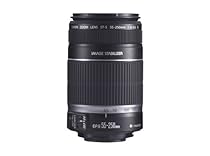
One of the best lens for portrait and low light photography.

I don't even know where to start. This lens produces sharp pictures and great color and contrast. And for its price (which seems to climb recently) it is worth more than 5 stars rating. I initially get this lens for low light action and sport photography (as this lens is famous for being one of the fastest lens together with its brother 50mm f/1.4) but I also found out that this lens is also perfect for portrait and other general purposes (macro etc). This is definitely a very versatile lens.
As much as I want to encourage everyone to buy this lens right away let me mention some of the limitation that you would see (which I think will be helpful to go over before deciding to buy this lens):
First being a prime lens you will need to move your feet a lot to compose your picture. If you are used to zoom lens don't underestimate this limitation. It takes me a while to get used to it and sometime I still find people looking at me wondering why I am moving forward and backwards. the good news is that most of the time they don't think I'm weird but they are actually wondering if I'm a professional photographer.
Secondly the focal range of 50mm which is considered the normal lens and great for portrait lens. but on many DSLRs which is not full frame (unless you have a full frame Nikon DSLR like the D700 or D3 then 50mm is 50mm) this lens become a 75mm equivalent which is in the border of a short tele lens. I actually like the 75mm equivalent though I often have to move backwards when taking picture of a group of people.
Third in some situation the autofocus might not able to focus (which is common for many other lens too). It is hard for the autofocus to lock when aiming at a wall that is one color (usually black or white) or on a clear sky (day or night). This kind of makes sense to me actually. IN these situations the AF assist light doesn't help either so you can opt for manual focus or set the focus to infinity when you can't find focus lock on scenic/landscape or sky photography. So far I don't have many problems with the autofocus.
Sharpness increases as you stop down to f/2.2 or f/2.5. I actually use f/1.8 most of the time and the results are still nice. Personally I'd rather use f/1.8 aperture settings than stopped down (e.g to f/2.8) and compensate with higher ISO setting which often gives me grainy picture. But if your object is not moving (static) then it is better to stop down to f/2.8 or more.
If you are wondering whether you should get a fast lens or a lens with VR (Vibration Reduction) here's my take: In overall VR does help a lot (as it will reduce camera shake) and will produce better/sharper picture than equivalent lens without VR (especially if the object is static). If the object is moving (sports/action) then VR feature alone might not help (depending on how fast the object is moving and how much light is available) and a fast lens often end up being a far better solution even without VR feature as it will allow much faster shutter speed to freeze motion. Using tripod (and a remote) will substitute for the need of VR feature. In general I would recommend getting a fast lens with VR feature (and usually it is expensive) such as the 70-200 f/2.8 VR but if one can only get for one or the other then find out what do you want to use the lens for and then use the guideline mentioned here.
If you are wondering whether you will get the benefit of buying f/1.4 lens over a f/1.8 lens just remember that the f/1.4 lens is about 60% faster than f/1.8 at its widest aperture setting. With this information you can decide if the additional speed will justify the additional cost. The bokeh is nicer as well in f/1.4 lens but I think speed is usually the main factor in deciding whether to get the more expensive f/1.4 lens.
Here are the summary of pros and cons for this Nikon 50mm f/1.8D AF lens:
Pros:
1. Very fast (f/1.8)
2. Very sharp pictures (especially when stopped down to f/2.2 f/2.5 or more.)
3. Great for sport/action photography
4. Great for indoor and low light situation
5. Great for portrait
6. Bokeh is almost as good as many expensive Nikon tele-lens
7. Fast autofocus
8. Good for wedding photography (or no-flash event). However if this is your main objective then you might want to get the 50mm f/1.4 version or 28-70mm f/2.8 lens)
9. 75mm equivalent which can be considered a short tele lens (I actually like the fact that it's 75mm equivalent vs 50mm in DSLR. if you need more zoom you can get the Nikon 85mm f/1.8 or the 70-200mm f/2.8 VR). If you have full frame DSLR(like the D3 or D700) then this #9 pros is not applicable.
10. Inexpensive
Cons:
1. Being prime lens you need to move your feet a lot to adjust/compose
2. Autofocus issue on some situations (read detail above)
3. Plasticy build
4. Autofocus is not the most silent but very reasonable
5. 75mm equivalent with 1.5x multiplier on non full frame DSLR (many people find this is an odd range for normal lens. I actually like it). If you have full frame DSLR(like the D3 or D700) then this #5 cons is not applicable.
6. Autofocus does not work with D40 D40x D60 and D5000. The newer 50mm f/1.4G AF-S lens or 35mm f/1.8G AF-S lens will autofocus with those cameras.
Bottom line: This lens is so versatile (and inexpensive) that I think everyone should own in addition to all the lenses that they already have. Being a very fast lens it enables me to take pictures in low light (sport/action photography) that I otherwise wouldn't be able to do.
After knowing its limitation I would predict that 99% of you that decides to buy this lens will find this lens very useful. And if you decide that you don't like it (which I think not more than 1%) I'm sure there will be a lot of people who wouldn't mind buying it from you (with some discount of course).
Again I would recommend everyone to get this lens. In some ways I can say that this lens makes me a better photographer.
Happy Photographing!
Sidarta TanuMore detail ...